As vehicles evolve toward software-defined architectures, high-resolution sensors, and centralized compute, in-vehicle data rates are rapidly increasing. Emerging applications such as ADAS, autonomous driving, and high-bandwidth infotainment are pushing network requirements well beyond traditional automotive communication speeds. This is where 25 Gbps Automotive Ethernet comes into play, and where Electromagnetic Compatibility (EMC) becomes a defining challenge.
Why EMC Matters More at 25 Gbps
At higher data rates, electrical signaling becomes increasingly susceptible to electromagnetic interference (EMI). Copper-based interconnects, which are currently the norm, can act as both sources and victims of radiated emissions. At 25 Gbps, especially over longer copper runs, even small imperfections in shielding, grounding, or PCB layout can lead to:
- Signal integrity degradation
- Increased bit error rates
- System-level EMC test failures
- Interference with sensitive automotive subsystems (radar, cameras, wireless)
Another issue caused due to EMI that is often overlooked by OEMs is the inevitable need to dedicate additional time and resource expenditure in conducting iterative simulations and tedious diagnosing, re-designing and re-wiring processes. That combined with the growing bill-of-material (BOM) costs due to shielding, makes maintaining EMC a very expensive process.
What This Means in the Real Driving Experience
EMC issues aren’t just lab problems and if left unaddressed, they translate directly into real-world vehicle behavior. At 25 Gbps, EMI can have visible and sometimes critical effects:
- Sensor glitches: Camera or radar feeds may show frame dropouts, impacting ADAS perception
- Infotainment instability: Audio artifacts, or lag in high-resolution video streaming
- Intermittent connectivity: Links may drop packets when other systems switch on
- Increased latency or jitter: Affecting time-sensitive applications like sensor fusion
The Advantage of Optical
Optical transceivers offer a fundamentally different approach. Because they transmit data using light rather than electrical signals, fiber optic links are inherently immune to electromagnetic interference and do not radiate emissions. They also provide galvanic isolation, which completely eliminates ground loops between connected systems.
This delivers several key advantages:
- EMI Immunity: No susceptibility to external electromagnetic noise
- Zero Radiated Emissions: Eliminates a major source of EMC failures
- No Ground Loops: Electrical isolation prevents noise from ground potential differences
- Consistent Signal Integrity: No degradation over distance due to electrical losses
- Simplified System Design: Reduced need for shielding, filtering, and complex PCB constraints
- Lower Development Time: Lesser project time spent on EMC simulations and re-designs
For 25 Gbps links, these benefits become especially compelling, enabling robust performance even in electrically noisy environments.
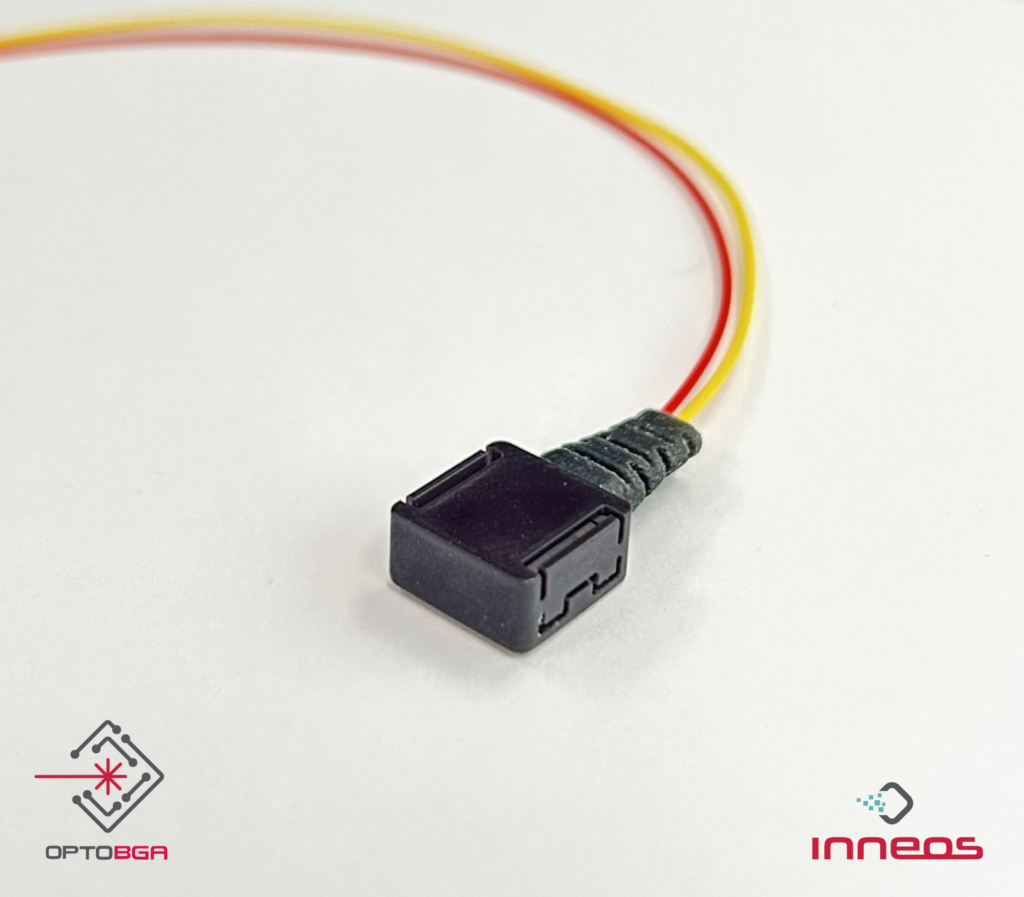
Solutions like Cheetah, Inneos’s 25Gbps optical transceiver, are built to bring these advantages into high-speed automotive environments, delivering reliable 25 Gbps performance even under the harsh electrical conditions found in modern vehicles. By leveraging optical technology, Cheetah enables engineers to meet stringent EMC requirements without the traditional design trade-offs associated with copper-based systems.
Looking Ahead
As the automotive industry moves toward zonal architectures and centralized compute, the demand for higher bandwidth, lower latency, and greater reliability will only increase. Optical interconnects are well-positioned to play a key role in this transition (particularly at 25 Gbps and beyond), by enabling robust, EMI-resilient communication in even the most demanding environments.